Oregon Coastal Attempt: Desert Heat, Biscoff Cookies, & Marine Layers
Flight Overview & Telemetry
✈️| Route | U42 → KTVY → KEKO → 3S8 → KLKV → KEKO → U42 |
| Total Legs | 5 |
| Passengers | Julie & Daughters |
Interactive Track Map
🗺️With a drive to log cross-country flight hours and a window of a few free days, we planned a flight out to the Oregon coast to visit my brother-in-law and his family in Brookings. June along the Pacific Northwest coast brings notoriously stubborn marine layers, but with solid inland alternates in mind, we decided to give it a shot.
To beat the summer heat over the Nevada desert, I repositioned the airplane from South Valley (U42) to Tooele Valley (KTVY) the evening prior—just under two miles from home—allowing for an early morning departure.
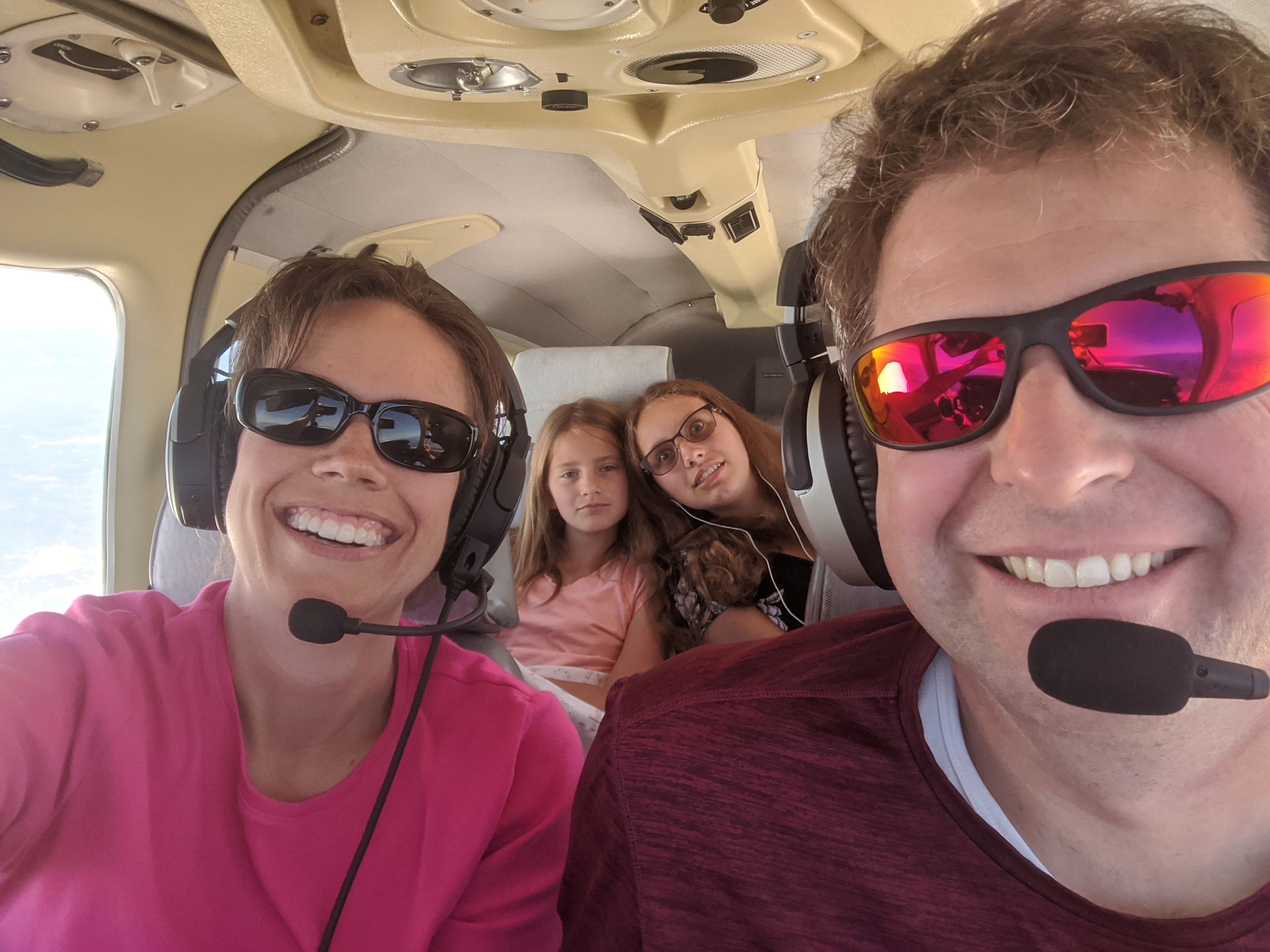 All loaded up and ready for the flight west.
The Way Out: Desert Fuel & Coastal Fog
Our first leg took us west across Nevada into Elko (KEKO) for fuel, where my daughters made the important discovery of complimentary Biscoff cookies at the FBO. From Elko, we pushed northwest to Lakeview, Oregon (KLKV) for our final fuel stop before the coast.
We hung out at the Lakeview FBO for about an hour, watching weather updates and waiting to see if the morning fog along the coast would burn off. Reports from family on the ground in Brookings suggested the layer might be thinning, and with plenty of fuel to backtrack inland to Grants Pass (3S8) or Medford (KMFR) if Brookings or Crescent City were socked in, we launched toward the coast.
Just a little over a month shy of completing my Instrument rating, I was flying VFR. While I knew I had the skill set to safely execute the ILS into Crescent City, staying legal meant respecting VFR visual conditions. As the track log shows, the coastal marine layer held firm, blocking our approach into Brookings.
Diversion & The Bumpy Journey Home
We made the tactical decision to backtrack inland and landed safely at Grants Pass (3S8) to spend the night.
The following morning, we retraced our steps back across Oregon and Nevada toward Utah. Summer thermal activity over the sun-baked desert terrain made for a notoriously bumpy ride back home—a leg that officially cemented my wife’s deep distaste for hot-weather desert turbulence.
Despite not landing on the coast, it was an invaluable real-world exercise in weather evaluation, diversion execution, and aeronautical decision-making.